Healthy Aging · Memory & Focus
“The Word Was Right There… Then It Wasn’t.” I Stopped Telling Stories at Family Dinners. Here’s What I Learned About Why Words Go Missing.
The word isn’t gone. It’s stuck in delivery. Once I understood that, I finally knew what to do about it.
By Carol M., retired bank teller, Tennessee · Updated October 2026 · 7 min read
Dramatized story for illustration. Names and details are fictional.

In my family, I’m the storyteller. Or I was.
Forty years of standing behind a bank counter in Knoxville will give you a lot of stories, and I always had the timing for them. My late husband used to say I could make a trip to the post office sound like an adventure.
Last Thanksgiving I found out what it feels like to lose that, one word at a time.
Thanksgiving, Second Helping
Everybody was at the table. Kids, grandkids, my sister down from Chattanooga. Somebody said, “Mom, tell the one about the cows at the lake house,” and everybody groaned and laughed because they’ve heard it twenty times and still want it.
I got to the best part, the morning Jim came running down to the water in nothing but his…
“His… oh, you know. The… the thing.”
I could see them. Tall rubber boots, the ones that go up to your chest. I could see the color. I could not, for the life of me, get the word out.
Ten long seconds. Then my grandson Tyler laughed and said, “Waders, Grandma!” Everybody laughed, and the story went on without me. My daughter finished it.
It was nothing. Everyone forgot about it in a minute. Everyone except me.
I didn’t tell another story the rest of the night.
Lying in bed that night, I finally understood why it hurt so much. Those stories are how my grandchildren know their grandfather. Jim has been gone four years. When I tell the cows story, he’s at that table with us. If I stop telling it, they lose him a second time.
Getting Quieter, a Little at a Time
Over the next few months I noticed I was doing it more. Not losing words so much as avoiding them.
- Letting my daughter tell the family stories
- Keeping my answers short at Bible study
- Saying “that thing” or “whatchamacallit” and hoping someone filled it in
- Nodding along on the phone instead of jumping in
- Remembering the word an hour later, in the shower, when it didn’t matter anymore
It wasn’t that I had nothing to say. I was afraid of getting stuck in the middle of saying it, with everybody waiting.
Words were never the problem. Losing my place at the table was.

What I Tried First
I’m practical. I counted cash for a living. So I did what everyone tells you to do:
| What I tried | What happened | Fed the brain? |
|---|---|---|
| Word puzzles every morning | Got very good at word puzzles. Finding a word on paper at my own pace isn’t the same as finding it with six people looking at me. | × |
| “Just relax and it’ll come” | True, eventually. Usually twenty minutes too late. | × |
| More coffee before family visits | More jittery. Not more fluent. | × |
| A drugstore memory supplement | Took the whole bottle. Couldn’t point to one difference. | ? |
What I tried that first winter. The last column came later, once I understood what I’d been missing.
Then my sister sent me an article that finally explained what was actually happening in that pause. It changed how I saw the whole thing.
The Word Isn’t Gone. It’s Stuck in Delivery.
Researchers have a name for this: the “tip-of-the-tongue” moment. It happens to people of every age, and studies show it tends to happen more often as we get older. It’s one of the most common memory complaints adults over 50 report.
Here’s the reassuring part. In a tip-of-the-tongue moment, the word is usually still there. You often know what it means, what letter it starts with, even how many syllables it has. I could see those waders.
A typical tip-of-the-tongue moment: the word is stored, retrieval is what lags.
The brain has stored the word. What’s slow is retrieval: pulling it up at that exact second.
I think of it like the vault at the bank. Everything is in there, filed exactly where it belongs. But if the teller is tired, the lights are dim and five customers are waiting, it takes longer to get the right box out. Nothing is lost. It’s just slow to arrive.
And retrieval is fast, hard work. Work takes fuel.
The Hungriest Organ You Have
This next fact stopped me:
Your brain is about 2% of your body weight, but it uses roughly 20% of your body’s oxygen and energy.
And it keeps almost nothing in reserve. Minute by minute, it depends on blood flow bringing oxygen and nutrients. When that supply is generous, retrieval is quick. When it’s a little slower, so are you.
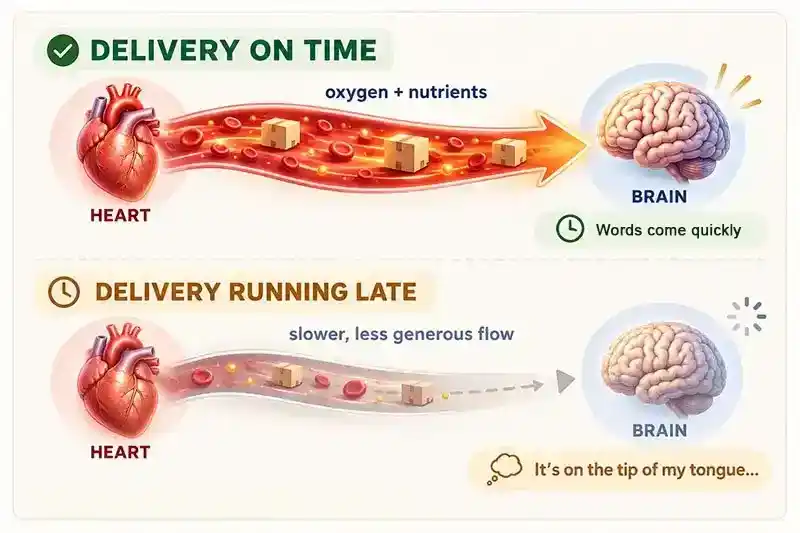
Then came the part that really got my attention.
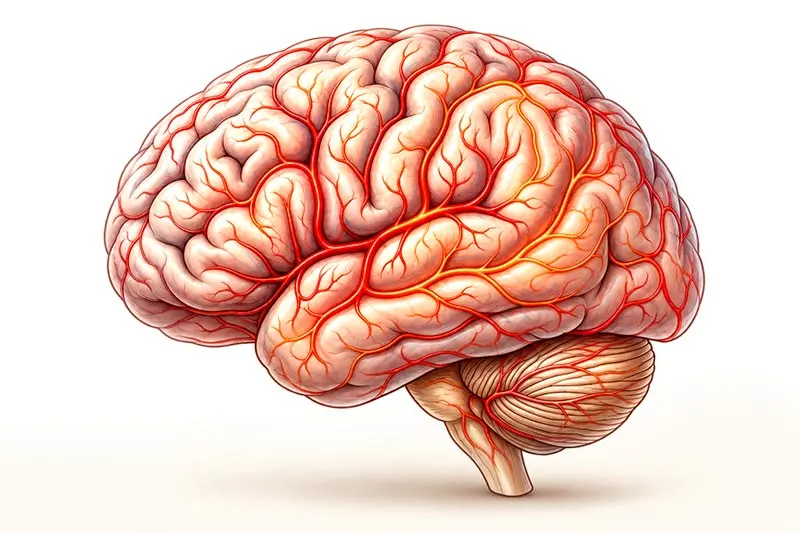
In 1998, three American scientists won the Nobel Prize in Physiology or Medicine for discovering that the body makes a molecule called nitric oxide and uses it as a signal to relax and open the blood vessels. It’s the body’s own “open the lanes” message.
As we age, researchers have found, the body tends to make and use less of it, and our blood vessels become gradually less flexible. Studies in healthy older adults have also found that blood flow to the brain tends to decline slowly over the years.
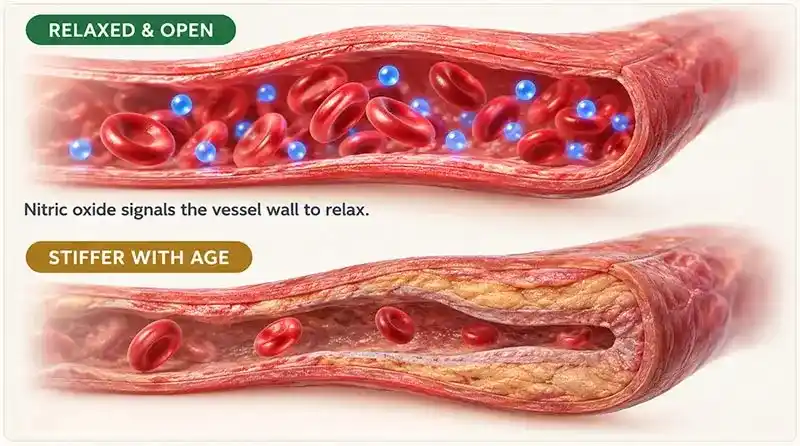
It’s not a disease. It’s one of those quiet changes of getting older. But it explained something none of my puzzles ever touched.
I’d been practicing finding words. I hadn’t done a thing about fueling the brain that finds them.
A Quick, Honest Note
Occasional word-finding pauses are very common and usually part of normal aging. But if you or your family notice bigger changes, like trouble following conversations, getting lost in familiar places or repeating the same question within minutes, please talk to your doctor. Many causes, from low vitamin B12 to thyroid problems, sleep issues and medication side effects, can be checked and addressed.
The 4 Things I Do Now
I didn’t want a project. I wanted a few habits I’d keep. These are the four that stuck:

For that last one, I went looking for something built around the supply idea, not just another single-herb pill like the one I’d already tried. I chose PrimeHoney. I’ll show you exactly what’s in it below. I counted cash for forty years, so believe me, I read every line of that label first.
See what’s inside PrimeHoney ↓Ingredients, packages and the 60-day guarantee
Back at the Table
The first morning I put that bottle next to the coffee pot, I felt something I hadn’t felt since Thanksgiving: like I was doing something about it, instead of just getting quieter.
I still lose a word now and then. Everybody does. But I stopped being afraid of it, because I finally understood it. When a word doesn’t come, I describe it, “the tall rubber fishing boots,” and keep right on going. Nine times out of ten, the word shows up a sentence later.
At my granddaughter’s birthday in September, somebody asked for the cows story. I told it. All of it. Jim was at that table again, and Tyler laughed so hard he had to put his fork down.

If you’ve caught yourself getting quieter than you used to be, you don’t have to just accept it. Keep talking. Keep moving. And give the hungriest organ you have the daily support it runs on. Here is exactly what I use.
The daily capsule from this story
PrimeHoney Cognitive Support
One capsule each morning, built around the supply side of memory: the oxygen and nutrients your brain runs on, minute by minute.*

- One capsule a day with water. Nothing to mix, measure or remember at night.
- Two ingredients, listed in plain sight below.
- Fits the routine you already have, right next to your morning coffee.
- 60-day money-back guarantee from the merchant.
What’s inside


What you’re really deciding about
This isn’t really about a capsule. It’s about the moments you’ve quietly started bracing for:
You can keep hoping those moments go well. Or you can start doing something about them tomorrow morning. PrimeHoney is one simple, daily way to start.*
Most of us wait far too long, the way I spent a whole winter getting quieter. Every month you put it off is another dinner of holding back and another story someone else finishes for you. The best day to start a daily habit is the next morning you wake up.
Choose your package
A daily supplement is meant to be taken consistently, so the 3- and 6-bottle packages give you the lowest cost per day and free shipping.
2 Bottles

6 Bottles

3 Bottles


Secure checkout. Also accepted: PayPal, Apple Pay and Google Pay. One-time purchase, no subscription.
Contains lithium. Check with your doctor first if any of the cautions above apply to you.

Try it for 60 days. The risk is on the merchant, not you.
Take PrimeHoney every morning. Give it the walks, the conversation and the time a daily routine deserves. If within 60 days of your purchase you decide it wasn’t worth it, contact the merchant’s customer support and ask for your money back, under their refund policy.
The only thing you can’t get back is another year of staying quiet at the table.
How do I take it?
One capsule each morning with a glass of water, following the directions on the label. Each bottle has 30 capsules.
Is the lithium the same as lithium medication?
No. Lithium orotate is a dietary trace-mineral form and is not the same as prescription lithium medication. Even so, lithium can interact with some medications and health conditions, so ask your doctor first if any of the cautions above apply to you.
Which package should I choose?
If you just want to try it, the 2-bottle package is the smallest commitment. If you want to give a daily routine a real chance, the 6-bottle package has the lowest cost per day and free shipping.
When will I notice a difference?
Everyone is different and results vary. PrimeHoney is designed to be taken every day as part of a routine, not as an overnight fix. That’s exactly why the 60-day guarantee gives you time to decide.
What happens after I order?
You’ll get an order confirmation by email, then tracking once it ships. After checkout, the merchant may show optional extra offers. You can decline them.
Is my payment secure?
Yes. Payment is handled on BuyGoods’ secure checkout page. PureWell Select never sees or stores your card details.
P.S. from Carol: If you scrolled straight down here, here’s the short version. In a tip-of-the-tongue moment the word is still there; it’s just slow to arrive. I spent a whole winter practicing words and never thought about supplying the brain that finds them. You can try PrimeHoney for 60 days with a money-back guarantee, so the only real risk is another holiday of letting someone else tell your stories.